Rehabilitation Meaning: A Comprehensive Guide to Recovery and Restoring Quality of Life
 Bookicare | 3/30/2026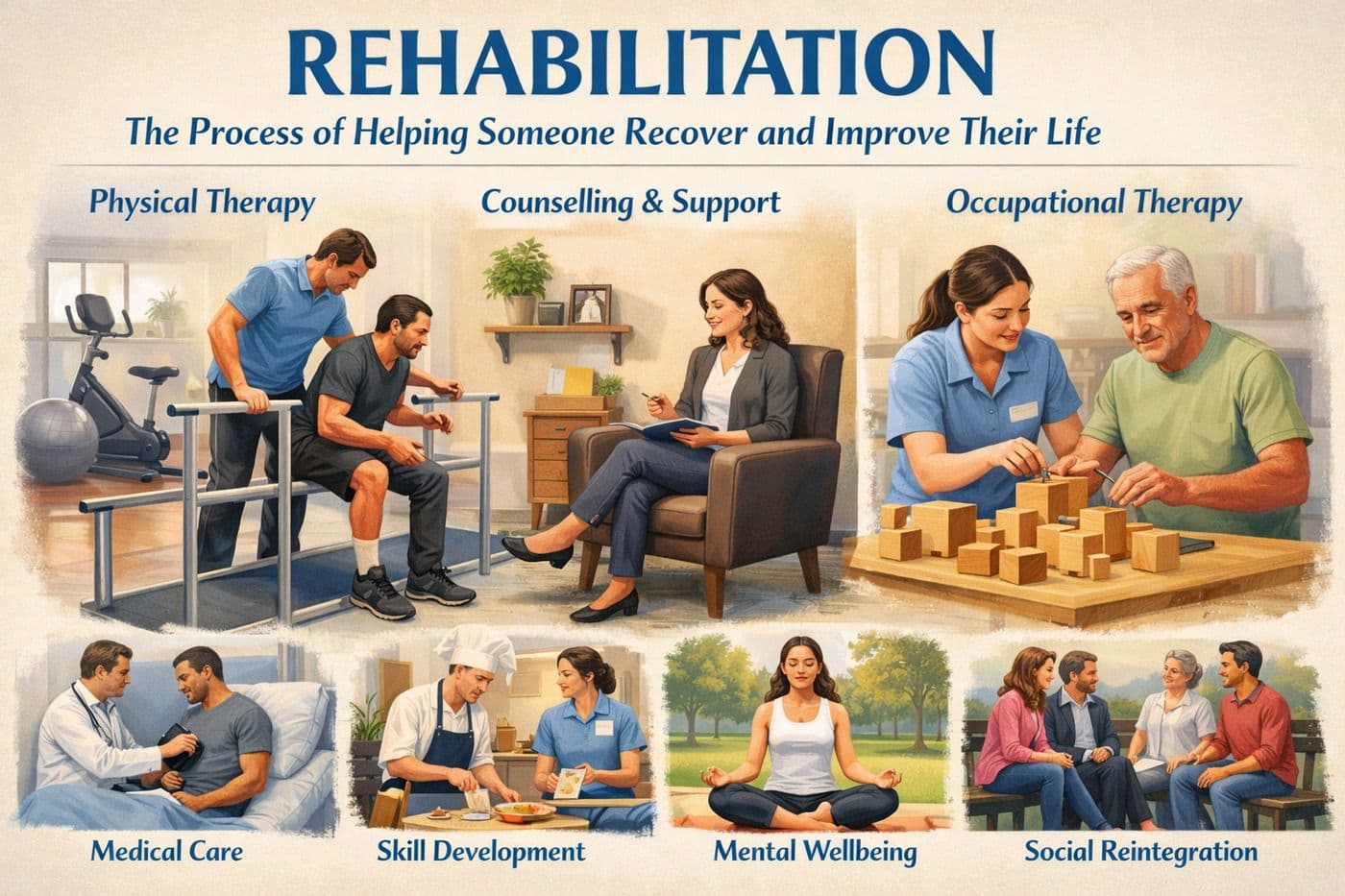
Table of Contents
Quick Menu
- Defining the Concept: What is the Core Rehabilitation Meaning?
- The Linguistic Roots: Rehabilitate vs. Rehabilitation
- The Different Types of Clinical Rehabilitation
- Physical Rehabilitation
- Neurological Rehabilitation
- Occupational Rehabilitation
- The Role of Physiotherapy in the Recovery Process
- Who Needs These Services?
- The Three Pillars of the Recovery Process
- Psychological and Social Dimensions
- Benefits: Why Is It Essential?
- Conclusion: Reclaiming Your Independence
When we encounter the term "rehab," our minds often jump to specific, narrow contexts. However, the true meaning of rehabilitation is far more profound and inclusive. It is a multi-dimensional medical and social process designed to assist individuals in achieving the highest possible level of independence and functionality following an injury, illness, or surgery.
In this guide, we will break down the linguistic, clinical, and practical definitions of this essential healthcare pillar, helping you understand how it serves as the bridge between "surviving" a medical event and "thriving" in daily life.
Defining the Concept: What is the Core Rehabilitation Meaning?
To understand rehabilitation in a clinical sense, one must look beyond simple healing. Acute medicine focuses on "fixing" a specific problem, like setting a broken bone or removing an appendix. The recovery process, however, is centred on the person and their ability to interact with their environment.
According to the World Health Organisation (WHO), the concept involves interventions designed to optimise functioning and reduce disability in people with health conditions. It is not just a luxury for those who can afford it. It is a human right that enables people to return to work, care for their families, and participate in their communities.
The Linguistic Roots: Rehabilitate vs. Rehabilitation
To grasp the full rehabilitation meaning, it is helpful to look at the verb "rehabilitate." Derived from the Latin rehabilitare, it literally means "to make fit again."
In a modern healthcare context, this translates to:
- Restoring lost skills (such as walking after a stroke).
- Compensating for permanent changes (such as learning to use a prosthetic limb).
- Maintaining current levels of function in progressive conditions (such as Multiple Sclerosis).
The Different Types of Clinical Rehabilitation
The rehabilitation meaning varies slightly depending on the medical discipline involved. Because humans are complex beings, recovery must address the physical, cognitive, and emotional aspects of health.
Physical Rehabilitation
This is the most common form, focusing on mobility, strength, and pain management. It often involves physiotherapy to help patients regain the use of their muscles and joints. Whether it is recovering from a sports injury or a major joint replacement, the goal is to return to physical autonomy.
Neurological Rehabilitation
Following a brain or spinal cord injury, the nervous system requires specialised "re-training." This type of recovery focuses on neuroplasticity—the brain’s ability to form new neural pathways to bypass damaged areas.
Occupational Rehabilitation
The rehabilitation meaning here shifts toward "activities of daily living" (ADLs). Occupational therapists help patients learn how to dress, cook, and use technology, often adapting the patient’s home or workplace environment to suit their new physical needs.
The Role of Physiotherapy in the Recovery Process
A significant portion of the rehabilitation meaning is tied to the practice of physiotherapy. While the two terms are often used interchangeably, they are distinct. Rehabilitation is the overarching goal (the "destination"), while physiotherapy is one of the primary "vehicles" used to get there.
Physiotherapists use evidence-based exercises, manual therapy, and education to facilitate the recovery process. They don't just treat the injury; they treat the movement patterns that led to the injury or resulted from it, ensuring a holistic recovery.
Who Needs These Services?
Understanding the rehabilitation meaning helps clarify who should seek these services. It is a common misconception that this path is only for athletes or those who have survived major accidents. In reality, it is beneficial for:
- Post-Surgical Patients: To prevent scar tissue complications and regain strength.
- Elderly Individuals: To prevent falls and maintain independence.
- Chronic Pain Sufferers: To manage conditions like arthritis without over-reliance on medication.
- Post-Cardiac Patients: To safely strengthen the heart muscle after a myocardial infarction.
The Three Pillars of the Recovery Process
To truly embody the rehabilitation meaning, a programme must follow a structured, patient-centric timeline:
- Assessment: Identifying the patient’s current limitations and, more importantly, their personal goals.
- Intervention: The active phase involves exercises, therapies, and medical monitoring.
- Evaluation: Measuring progress against the initial goals and adjusting the "road map" accordingly.
Psychological and Social Dimensions
We cannot discuss the rehabilitation meaning without mentioning mental health. Long-term illness or sudden disability often leads to depression or anxiety. A truly comprehensive programme includes psychological support to help patients cope with the emotional toll of their physical journey. Social workers also play a role, ensuring that the patient has the necessary support systems at home.
Benefits: Why Is It Essential?
The benefits of a structured recovery programme are backed by decades of clinical data. Beyond the obvious physical improvements, these services offer:
- Reduced Hospital Readmissions: Patients who undergo proper recovery are less likely to experience complications that lead them back to the ward.
- Cost-Effectiveness: Investing in recovery early prevents the long-term costs associated with permanent disability and home care.
- Empowerment: It shifts the patient from a passive recipient of care to an active participant in their own health.
Conclusion: Reclaiming Your Independence
In summary, the rehabilitation meaning is centred on hope and the practical restoration of life. It acknowledges that while a medical event may have changed your circumstances, it does not have to define your future. By utilising expert clinical guidance, you can navigate the path from injury to independence with confidence.
If you are seeking more detailed information on how to start this journey, we invite you to explore the Bookicare homepage. At BookiCare, we believe in connecting you with the right specialists to ensure your recovery is handled with the highest standards of clinical excellence. You can also browse our dedicated physiotherapy sections for more specific treatment programmes.
Last Articles
 Bookicare | 4/6/2026
For many individuals experiencing thinning hair or a receding hairline, the journey toward restoring confidence often le...
 Bookicare | 4/3/2026
Deciding to undergo a structural or aesthetic change to your nose is a significant step. Whether you are seeking to impr...
 Bookicare | 4/1/2026
When a GP refers you to a hospital for kidney or bladder concerns, the first question many patients ask is, "What is a u...
Frequently Asked Questions
Who are you, Bookicare?
Which hospital do you represent?
Which clinic are you calling me from?
Will you help me obtain a visa?
Do I need to provide my medical records and passport?
What is the cost of Bookicare's services?
What is the cost of treatment?
Why do you recommend these particular clinics?
Does the clinic guarantee that the treatment will be effective?
Where will I stay?