
What is ENT? A Comprehensive Guide to Ear, Nose and Throat Health
 Bookicare | 3/25/2026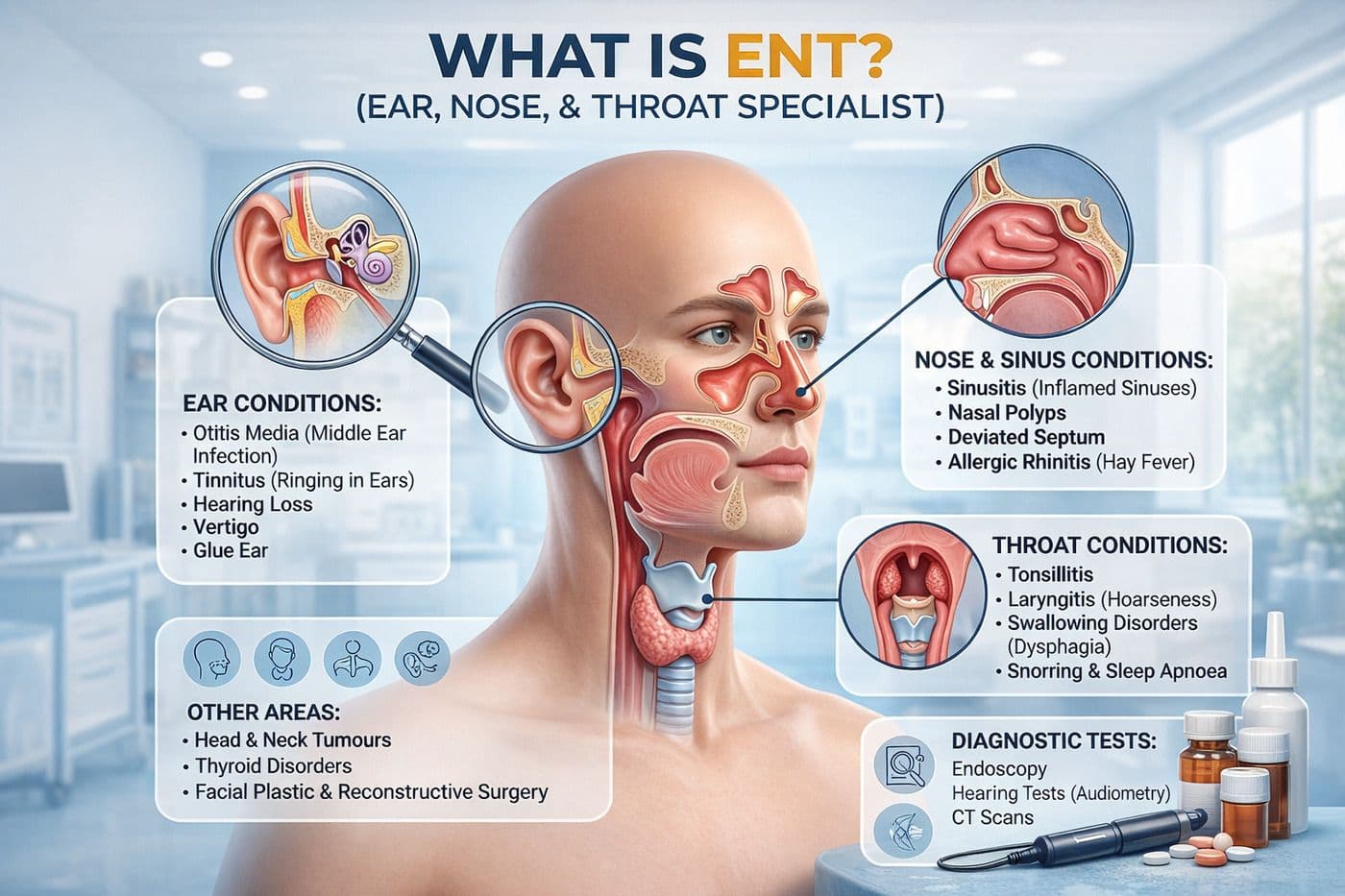
Whether you have been referred by a GP or are simply curious about a persistent sinus issue, understanding what is ENT and how it impacts your daily life is the first step towards better health. The field of ENT medicine encompasses a vast array of conditions that affect some of our most vital sensory functions, including hearing, balance, breathing, and swallowing.
Understanding the Basics: What is ENT?
The term ENT is an abbreviation for Ear, Nose, and Throat. In the medical community, this field is formally known as otorhinolaryngology. While the name may seem straightforward, the scope of the speciality is incredibly broad, involving the surgical and medical management of conditions affecting the head and neck.
If you are wondering what is ent in a practical sense, think of it as the medical discipline that keeps your primary senses in check. An ENT specialist is trained to treat everything from a simple ear infection to complex tumours of the skull base.
The Meaning and Scope of Otorhinolaryngology
The word otorhinolaryngology is derived from Greek roots: oto (ear), rhino (nose), and laryngo (throat). Because the ears, nose, and throat are all interconnected via a complex system of passages and tubes, a problem in one area often leads to symptoms in another.
For instance, a nasal obstruction can lead to pressure in the ears or a sore throat caused by mouth breathing. This is why the ENT specialist takes a holistic approach to the upper respiratory system and the sensory organs contained within the head.
Common Conditions Managed by ENT Specialists
When exploring what is ENT, it is essential to look at the common diseases that fall under this umbrella:
- Sinusitis: Inflammation of the sinuses that causes facial pain and nasal congestion.
- Tonsillitis: Frequent infections of the tonsils, often requiring surgical intervention in chronic cases.
- Otitis Media: Infections of the middle ear, which are particularly common in children.
- Hearing Loss: Ranging from age-related decline to sudden loss caused by trauma or infection.
- Nasal Obstruction: Issues such as a deviated septum or nasal polyps that hinder breathing.
Diagnostic Methods in the ENT Clinic
When you visit an ENT specialist, they use various advanced tools to diagnose your condition accurately:
- Physical Examination: A thorough check of the head and neck area.
- Endoscopy: Using a thin, flexible tube with a camera to look deep into the nasal passages or throat.
- Hearing Tests: Audiometry tests to determine the degree and type of hearing impairment.
- Imaging: Utilising CT or MRI scans to get a detailed view of the internal structures.
When Should You See an ENT Doctor?
Knowing what is ENT is helpful, but knowing when to book an appointment is crucial for your long-term health. You should consider seeking professional advice if you experience:
- Chronic sore throats or hoarseness that lasts more than two weeks.
- Persistent ringing in the ears (tinnitus).
- Frequent dizzy spells or balance issues.
- Lumps in the neck or around the jaw area.
- Severe snoring or suspected sleep apnoea.
The Importance of Specialised Care
While a general practitioner can treat minor issues, an ENT specialist provides the surgical expertise and specific diagnostic equipment needed for complex cases. Whether it is managing allergies or performing delicate reconstructive surgery, their focus remains on improving the patient's quality of life.
Conclusion
In summary, it is the vital branch of medicine dedicated to the complex systems of the head and neck. By understanding the scope of this field, you can better advocate for your health and seek the right specialist when symptoms arise. For more detailed information about our clinical services and to explore our full range of ear, nose, and throat care, please visit our Homepage .
Last Articles
 Bookicare | 4/6/2026
For many individuals experiencing thinning hair or a receding hairline, the journey toward restoring confidence often le...
 Bookicare | 4/3/2026
Deciding to undergo a structural or aesthetic change to your nose is a significant step. Whether you are seeking to impr...
 Bookicare | 4/1/2026
When a GP refers you to a hospital for kidney or bladder concerns, the first question many patients ask is, "What is a u...
Frequently Asked Questions
Who are you, Bookicare?
Which hospital do you represent?
Which clinic are you calling me from?
Will you help me obtain a visa?
Do I need to provide my medical records and passport?
What is the cost of Bookicare's services?
What is the cost of treatment?
Why do you recommend these particular clinics?
Does the clinic guarantee that the treatment will be effective?
Where will I stay?